

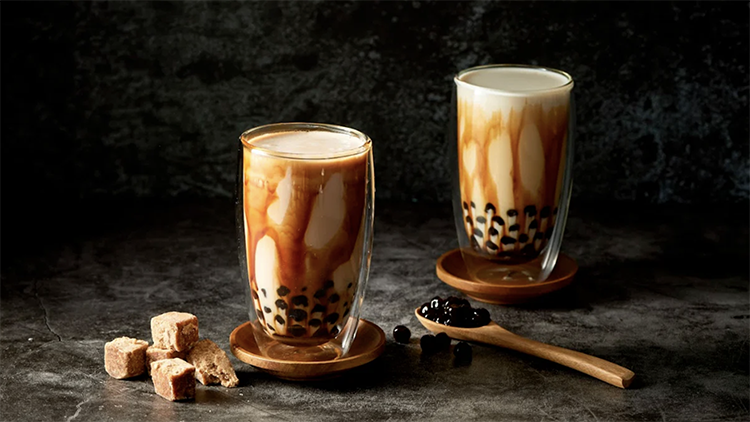
If you’ve ever looked at a cup of brown sugar milk tea with mysterious black balls at the bottom and thought, what am I actually drinking, you are not alone. Boba has exploded in popularity over the last couple decades, but a lot of people still are not totally sure what it is.
So let’s break it down.
A Super Brief History of Boba
Boba, also known as bubble tea, started in the 1980s in Taichung, Taiwan. Tea shops were already serving iced milk tea, especially during hot summers. At some point, someone had the idea to add chewy tapioca balls to the drink, and things changed forever.
One popular origin story points to the tea house Chun Shui Tang, where tapioca pearls were added to iced tea during a meeting just for fun. Whether that was the exact moment or not, the combo took off quickly.
From Taiwan, bubble tea spread across Asia and eventually made its way to the United States. Now you can find it everywhere, from local neighborhood shops to international chains like Gong Cha and Chatime.
Technically, “boba” refers to the pearls themselves. In the U.S., most people use it to describe the whole drink.
What Is Boba Made Of?
At its core, classic milk tea boba is pretty simple. It usually comes down to four main parts.
Tea
Most commonly black tea, but green tea, jasmine, oolong, and matcha are all popular bases.
Milk or Creamer
Some shops use dairy milk, some use non dairy creamer, and a lot now offer oat, almond, or other plant based options.
Sweetener
Sugar syrup, brown sugar, honey, or flavored syrups depending on the drink.
Tapioca Pearls
The chewy balls at the bottom are made mostly from tapioca starch, which comes from the cassava root. The starch is mixed with water, rolled into small balls, and boiled until soft and chewy. That signature chewiness is often described as “QQ” in Taiwanese food culture. It basically means bouncy and satisfyingly chewy.
How Is Boba Made?
Here is the simple version of what happens behind the counter.
First, the pearls are boiled. They usually cook for around 20 to 30 minutes, then sit covered so they finish softening. After that, they are often soaked in brown sugar syrup to add flavor and keep them from sticking together.
Next, the tea is brewed strong and chilled. It needs enough flavor to stand up to milk and sweetness.
Then everything gets shaken together with ice. The shaking creates tiny bubbles on top, which is actually where the name “bubble tea” comes from.
Finally, the pearls go into the bottom of the cup, the tea mixture is poured over, and a wide straw gets stabbed through the lid so you can sip and chew at the same time.
It is simple, but when it is done right, it hits.
Why Is It So Popular?
Part of the appeal is that you can customize almost everything. Sweetness level, ice level, toppings, type of milk, type of tea. There are endless combinations.
It is also a texture thing. Cold tea, creamy milk, chewy pearls. It is not just a drink, it is something to interact with.
And let’s be honest, it looks good in your hand.
So if you have ever wondered what the heck boba actually is, now you know. It is tea, milk, sugar, and tapioca pearls that somehow became a global phenomenon.
Not bad for a drink that started as an experiment in a tea shop in Taiwan.
If all this talk has you craving a cup, check out our directory to find boba near you and go treat yourself.